
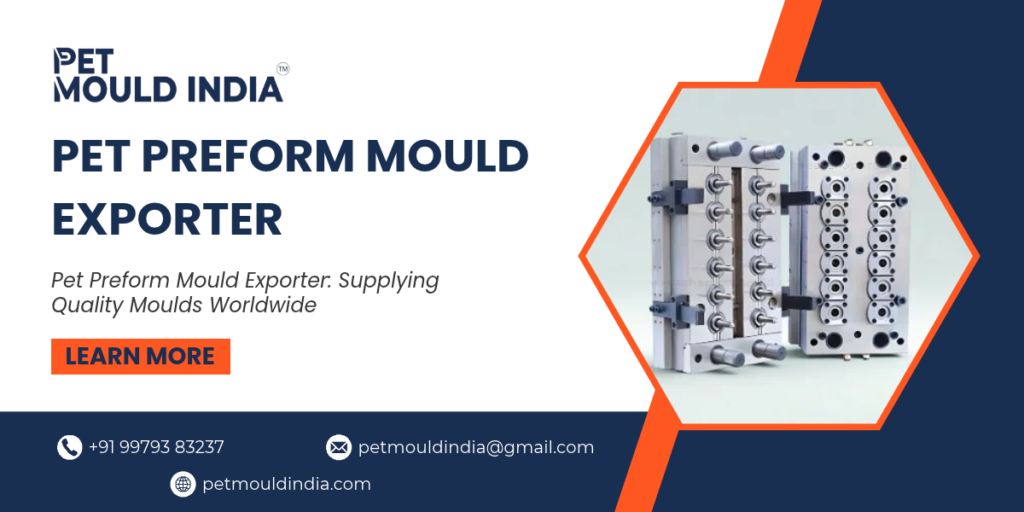
Pet Preform Mould Exporter: Supplying Quality Moulds Worldwide
The global plastic packaging industry depends on reliable PET bottle manufacturing solutions. A high-quality PET preform mould plays an important role in producing accurate, consistent and durable preforms for different bottle applications. Choosing the right PET preform mould exporter helps manufacturers source mould solutions that meet their production requirements and quality expectations.
For international buyers, selecting a mould exporter involves more than comparing prices. Manufacturing quality, engineering capabilities, customisation, technical documentation, packaging, delivery coordination and after-sales support are important factors to evaluate.
In this guide, we explore the key features of quality PET preform moulds and explain what international buyers should consider when selecting a reliable exporter.
What Is a PET Preform Mould?
A PET preform mould is an injection mould used to manufacture PET preforms. These preforms are later processed through stretch blow moulding to produce finished PET bottles in different shapes and sizes.
The mould helps determine important product characteristics, including preform weight, dimensions, neck finish and consistency. Accurate mould design is essential for producing preforms that meet the requirements of the final bottle application.
PET preform moulds are commonly used in the production of bottles for packaged drinking water, carbonated beverages, edible oil, food products, pharmaceuticals, cosmetics and industrial packaging.
1. Why Is Choosing the Right PET Preform Mould Exporter Important?
International buyers need a supplier that understands both mould manufacturing and the requirements of overseas customers. A suitable exporter should provide clear product specifications, consistent manufacturing quality and reliable communication throughout the order process.
Choosing the right exporter can help businesses with:
- Access to precision-engineered PET preform moulds.
- Custom mould designs for different bottle requirements.
- Suitable cavity configurations for production needs.
- Clear technical specifications and product information.
- Better coordination during international orders.
- Technical guidance and maintenance support.
2. Check Mould Quality and Manufacturing Materials
Mould quality is one of the most important factors when selecting a PET preform mould exporter. The materials and manufacturing processes used in mould production influence durability, dimensional accuracy and long-term performance.
Before placing an international order, ask the exporter about the following quality aspects:
- High-grade mould steel: Supports strength, stability and long service life.
- Heat treatment: Helps achieve the required material hardness and durability.
- Precision machining: Supports accurate mould dimensions and cavity geometry.
- Surface finishing: Helps maintain the required surface quality.
- Quality inspection: Helps verify mould components and assembly before delivery.
A professional exporter should be able to explain the material specifications and quality checks followed during manufacturing.
3. Evaluate Precision Engineering Capabilities
Precision engineering is essential for manufacturing PET preform moulds that deliver consistent results across production cycles. Accurate cavity dimensions and properly manufactured components help maintain preform quality.
When comparing exporters, review their manufacturing capabilities and production technology.
Important processes include:
- CNC machining: Used for accurate manufacturing of mould components.
- EDM machining: Helps create detailed mould features.
- Surface coating: Applied according to component and design requirements.
- Heat treatment: Helps achieve the required material properties.
- Assembly and quality assurance: Help verify the completed mould.
An exporter with suitable engineering capabilities can develop mould solutions according to the buyer’s technical specifications.
4. Understand Cavity Configurations and Production Capacity
Cavity configuration is an important consideration when purchasing a PET preform mould. The number of cavities affects the quantity of preforms produced in each injection cycle and should match the production capacity of the injection moulding machine.
Common configurations include:
- Low-cavity moulds: Suitable for specific production requirements and lower output volumes.
- Multi-cavity moulds: Designed to produce multiple preforms in one injection cycle.
- High-cavity moulds: Suitable for higher production requirements when supported by the machine and process.
Before selecting a mould, confirm the required cavity count, expected output, machine capacity and production conditions with the exporter.
5. Check Hot Runner and Cooling System Design
Hot runner and cooling systems are important parts of PET preform mould engineering. Their design can influence material flow, temperature control, cycle time and production consistency.
Hot Runner System
The hot runner system controls the flow of molten PET material towards the mould cavities during injection. The configuration should be suitable for the mould design, material requirements and machine specifications.
Cooling System
The cooling system helps control mould temperature during production. Proper cooling design supports consistent preform formation and helps manage production cycle requirements.
International buyers should request technical details about the hot runner arrangement, cooling channels, maintenance requirements and machine compatibility before confirming an order.
6. Look for Customised PET Preform Mould Solutions
Different markets and packaging businesses may require different bottle designs, preform weights and neck finishes. Therefore, customisation is an important consideration when selecting a PET preform mould exporter.
A customised mould can be designed according to specific production and product requirements.
Important customisation parameters include:
- Preform weight and dimensions.
- Neck finish and neck size.
- Cavity count and layout.
- Hot runner system configuration.
- Cooling system requirements.
- Injection moulding machine compatibility.
Providing accurate drawings, samples and machine details helps the exporter understand the project and develop a suitable mould design.
7. Verify International Shipping and Export Documentation
International mould purchases require proper coordination between the buyer and exporter. Apart from manufacturing, buyers should understand the shipping arrangements, packaging requirements and documentation involved in the order.
Before confirming an international purchase, discuss the following points:
- Commercial Invoice: Confirms the commercial details of the transaction.
- Packing List: Provides information about the packaged mould and shipment contents.
- Shipping Documents: Documents required by the selected transport method.
- Country of Origin: Confirm whether a certificate of origin is required by the destination country.
- Packaging: Discuss suitable protective packaging for heavy and precision-engineered mould components.
- Delivery Terms: Confirm the agreed Incoterms, freight responsibilities and delivery arrangements.
Documentation and import requirements can differ between countries. Buyers should confirm the applicable requirements with their customs broker or logistics partner before shipment.
8. Evaluate Technical Support and After-Sales Service
Technical support is important when purchasing moulds from another country. Clear communication and access to technical guidance can help buyers manage installation, operation and maintenance requirements.
Before selecting an exporter, ask about:
- Mould installation and commissioning guidance.
- Technical drawings and product documentation.
- Maintenance instructions.
- Availability of replacement components.
- Troubleshooting and technical assistance.
- Warranty and service conditions.
A clear support arrangement helps international buyers understand how technical issues and maintenance requirements will be handled after delivery.
9. Compare Pricing, Delivery Time and Overall Value
Price is an important part of an international mould purchase, but it should not be the only deciding factor. Manufacturing quality, technical specifications, packaging, freight, delivery timelines and support can all affect the overall investment.
Compare exporters based on:
- Mould material and manufacturing quality.
- Cavity configuration and technical specifications.
- Customisation and engineering capabilities.
- Manufacturing lead time.
- Packaging and transportation arrangements.
- Warranty and after-sales support.
- Total landed cost and applicable import charges.
Request a detailed quotation that clearly explains the product specifications, delivery terms and additional costs before placing an order.
Why Choose PET Mould India for PET Preform Mould Solutions?
PET Mould India is a PET mould manufacturer offering precision-engineered mould solutions for packaging and plastic manufacturing applications.
The company highlights high-precision engineering, durable mould construction and customised designs to meet different production requirements. Its PET preform mould manufacturing capabilities include CNC machining, EDM precision, surface coating, heat treatment, assembly and quality assurance.
The published PET preform mould specifications include:
- Cavity configuration: Up to 72 cavities.
- Preform weight: 6 g to 760 g.
- Neck size: 12 mm to 150 mm.
- Hot runner system: Pneumatic pin.
- Design features: Interchangeable components and advanced cooling systems.
These mould solutions are designed for beverage, pharmaceutical, cosmetic, food, dairy, household and industrial packaging applications. Actual configurations depend on the required design and machine compatibility.
International buyers can discuss their technical requirements, preferred mould configuration and project specifications directly with the company.
Explore the PET Preform Mould product range to learn more about the available features and manufacturing capabilities.
Checklist for Selecting a PET Preform Mould Exporter
Use this checklist to evaluate potential exporters before placing an international order.
| Evaluation Factor | What to Check |
|---|---|
| Manufacturing Quality | Steel grade, machining accuracy and finishing |
| Engineering Capabilities | CNC, EDM, heat treatment and quality checks |
| Cavity Configuration | Required output and machine compatibility |
| Customisation | Preform weight, neck finish and mould design |
| Technical Documentation | Drawings, specifications and maintenance details |
| Export Documentation | Invoice, packing list and applicable shipping documents |
| Packaging and Shipping | Protective packaging and delivery arrangements |
| After-Sales Support | Technical guidance, spare parts and warranty |
| Commercial Terms | Pricing, freight and delivery conditions |
Frequently Asked Questions (FAQs)
1. What does a PET preform mould exporter supply?
A PET preform mould exporter supplies injection moulds used to manufacture PET preforms for bottle production. Depending on the order, the supply may include customised mould configurations and related technical documentation.
2. How do I choose a reliable PET preform mould exporter?
Evaluate manufacturing experience, mould material quality, precision engineering, cavity configurations, customisation, shipping arrangements and after-sales support.
3. Can PET preform moulds be customised for international buyers?
Yes. PET preform moulds can be customised according to preform weight, neck finish, cavity count, hot runner requirements and injection machine specifications.
4. What documents are generally required for exporting moulds?
Common export documents may include a commercial invoice, packing list and transport documents. A certificate of origin or other documents may also be required depending on the destination country’s regulations.
5. Why is machine compatibility important?
Machine compatibility ensures that the mould dimensions, mounting arrangement, injection capacity and connections match the intended injection moulding machine.
6. What factors affect the price of a PET preform mould?
Price depends on cavity count, mould material, preform design, neck finish, hot runner system, engineering complexity and customisation requirements.
7. Does PET Mould India manufacture customised PET preform moulds?
Yes. PET Mould India states that it provides customised PET preform mould solutions based on requirements such as preform weight, neck finish, cavity layout and machine compatibility.
Conclusion
Selecting the right PET preform mould exporter is important for businesses looking for quality mould solutions and dependable international supply. Buyers should evaluate manufacturing quality, precision engineering, cavity configurations, customisation, documentation, shipping arrangements and after-sales support before making a decision.
A suitable manufacturing partner can help businesses obtain mould solutions that match their production requirements and support consistent PET preform manufacturing. Careful evaluation of technical and commercial details helps make international purchasing more organised and reliable.
Looking for precision-engineered PET preform mould solutions? Contact PET Mould India to discuss your requirements and explore suitable mould options.
 Users Today : 1
 Users This Month : 4
 Total Users : 5