
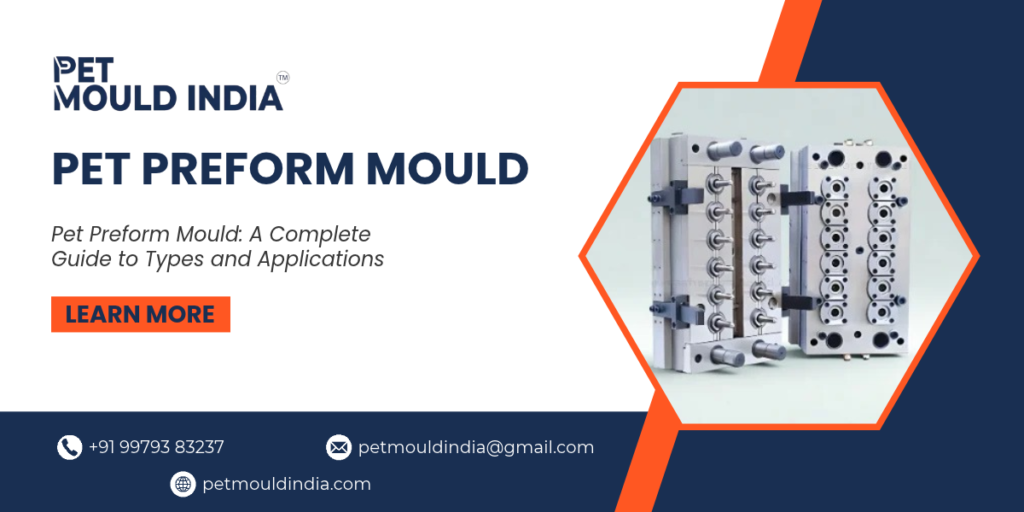
PET Preform Mould is an essential component in the manufacturing of PET bottles used across beverage, pharmaceutical, food, cosmetic and industrial packaging sectors. It plays a major role in determining the quality, dimensions, neck finish and consistency of the final bottle.
As packaging manufacturers continue to demand higher production efficiency and consistent product quality, selecting the right PET preform mould becomes increasingly important. Understanding mould types, manufacturing processes, technical features and applications can help businesses make better investment decisions.
What Is a PET Preform Mould?
A PET preform mould is a precision-engineered injection mould used to manufacture PET (Polyethylene Terephthalate) preforms. These preforms are small, test-tube-shaped plastic components that are subsequently heated and converted into finished bottles through a stretch blow moulding process.
The mould determines important preform characteristics, including weight, length, diameter, neck finish and dimensional accuracy. Consistency in these characteristics is essential for producing bottles that meet packaging requirements.
PET preform moulds are commonly used by manufacturers supplying packaged drinking water, carbonated beverages, edible oil, pharmaceutical products, cosmetics and other packaged goods.
How Does the PET Preform Mould Manufacturing Process Work?
PET preform manufacturing generally involves an injection moulding process. During this process, PET resin is heated until it reaches a molten state and is injected into precision-machined mould cavities.
Once the molten material enters the cavities, it is cooled under controlled conditions to form the required preform shape. The mould then opens, and the finished preforms are ejected for further processing.
1. PET Material Preparation
PET resin is prepared according to the required production specifications. Proper material handling and moisture control are important for maintaining the quality of the final preform.
2. Injection Moulding
The molten PET material is injected into the mould cavities under controlled pressure and temperature. Each cavity is designed to produce a preform with specific dimensions and weight.
3. Cooling Process
Cooling channels help control the temperature inside the mould. Effective cooling supports consistent preform quality and helps maintain production cycle efficiency.
4. Preform Ejection
After sufficient cooling, the mould opens and the finished preforms are removed through the ejection system.
5. Stretch Blow Moulding
The manufactured preforms are reheated and stretched inside a blow mould using compressed air. This process transforms them into finished PET bottles according to the required shape and capacity.
Different Types of PET Preform Moulds
PET preform moulds can be classified according to cavity configuration, preform design, neck finish and production requirements. Selecting the appropriate type depends on the bottle application, production volume and injection moulding machine.
1. Single-Cavity PET Preform Mould
A single-cavity mould produces one preform per injection cycle. It can be suitable for smaller production requirements, product development, sampling and specialized applications.
2. Multi-Cavity PET Preform Mould
A multi-cavity mould produces several preforms during one injection cycle. It is designed for manufacturers requiring higher production output and efficient use of their injection moulding machines.
Depending on the production requirements and machine configuration, multi-cavity moulds can be designed with different cavity counts.
3. Custom PET Preform Mould
Custom PET preform moulds are developed according to specific bottle designs and packaging requirements. They can be tailored to preform weight, neck dimensions, length, cavity layout and other technical specifications.
4. Hot Runner PET Preform Mould
Hot runner systems maintain the required temperature of the molten plastic within the runner channels. They help control material flow and can reduce runner-related material waste compared with conventional cold runner arrangements.
The appropriate hot runner configuration depends on the mould design, production material and machine requirements.
Important Features of a High-Quality PET Preform Mould
A reliable PET preform mould should be engineered to deliver dimensional accuracy, consistent production quality and dependable long-term performance.
Precision Engineering
Accurate machining and properly designed cavities help maintain consistent preform dimensions, weight and neck finish.
High-Quality Mould Steel
Suitable high-grade hardened steel helps provide strength, wear resistance and durability during repeated production cycles.
Efficient Cooling System
Well-designed cooling channels support controlled heat removal and help maintain uniform production quality.
Reliable Hot Runner System
A properly selected hot runner system supports controlled material distribution and consistent filling across mould cavities.
Easy Maintenance
Accessible components, replaceable inserts and suitable maintenance arrangements can help reduce downtime and support long-term mould performance.
Technical Specifications of PET Preform Moulds
Technical specifications vary according to the application, machine compatibility and preform design. PET Mould India lists the following manufacturing capabilities for its PET preform mould solutions:
| Specification | Available Configuration |
|---|---|
| Cavity Count | Up to 72 Cavities |
| Preform Weight | 6–760 g |
| Neck Size | 12–150 mm |
| Hot Runner | Pneumatic Pin |
| Components | Interchangeable Components |
Note: Actual configurations depend on the mould design, machine compatibility and customer requirements. Confirm the specifications for your particular project before ordering.
Applications of PET Preform Moulds
PET preform moulds support the production of bottles used in a wide range of industries. Their versatility makes them important for modern packaging manufacturing.
1. Packaged Drinking Water
PET bottles are widely used for packaged drinking water. Consistent preform dimensions and neck finish are important for bottle quality and cap compatibility.
2. Carbonated Beverages
Soft drinks and other carbonated beverages require bottles designed to meet specific packaging and pressure-handling requirements.
3. Food and Edible Oil Packaging
PET bottles are used for edible oils, sauces and various food products. Suitable preform design helps manufacturers achieve the required bottle capacity and shape.
4. Pharmaceutical Packaging
PET packaging is used for selected pharmaceutical and healthcare products. Manufacturers must consider the required dimensions, packaging specifications and product compatibility.
5. Cosmetic and Personal Care Packaging
Cosmetic and personal care brands use PET bottles for products such as lotions, shampoos and other liquid formulations.
6. Industrial Packaging
PET containers are also used for selected industrial and chemical packaging applications where the material and container design are suitable for the intended product.
Benefits of Using a Precision PET Preform Mould
- Consistent Preform Quality: Precision-designed cavities help maintain uniform dimensions and product quality.
- Improved Production Efficiency: Multi-cavity configurations can support higher output per injection cycle.
- Reduced Material Waste: Appropriate mould and hot runner design can help improve material utilization.
- Better Bottle Compatibility: Accurate neck finish and preform dimensions support reliable downstream bottle production.
- Long-Term Durability: Suitable mould materials and manufacturing processes support extended service life.
- Customized Production: Mould designs can be tailored to specific bottle shapes, weights and neck requirements.
How to Choose the Right PET Preform Mould?
Choosing the right mould is an important decision for packaging manufacturers. Before purchasing a PET preform mould, consider the following factors:
1. Define Your Bottle Requirements
Identify the required bottle capacity, preform weight, length, neck finish and final bottle design before selecting a mould.
2. Check Cavity Requirements
Choose a suitable cavity configuration based on your production volume, machine capacity and manufacturing targets.
3. Evaluate Machine Compatibility
Check injection machine specifications, mould dimensions, clamping requirements and other technical parameters to ensure proper compatibility.
4. Consider Steel Quality
Ask about the mould steel, heat treatment and machining quality. These factors influence mould durability and maintenance requirements.
5. Review Cooling and Hot Runner Design
Efficient cooling and a suitable hot runner configuration can contribute to stable production and consistent preform quality.
6. Check Manufacturer Experience and Support
Choose a manufacturer that can understand your requirements, provide technical guidance and support maintenance and replacement needs.
Why Choose PET Mould India for PET Preform Mould Solutions?
PET Mould India focuses on manufacturing precision-engineered PET preform moulds designed for consistent production, durability and operational efficiency.
The company highlights the following capabilities:
- Advanced CNC Machining: Precision manufacturing for accurate mould components.
- EDM Precision: Detailed machining for complex mould geometries.
- Surface Coating: Surface treatment according to mould requirements.
- Heat Treatment: Processing to support mould strength and durability.
- Assembly and Quality Checks: Inspection and assembly before delivery.
- Custom Engineering: Mould configurations tailored to preform weight, neck size and cavity requirements.
With manufacturing capabilities of up to 72 cavities and customization options, PET Mould India offers mould solutions for different PET packaging production requirements.
Explore the PET Preform Mould product page to learn more about its features and available configurations.
Frequently Asked Questions About PET Preform Moulds
1. What is a PET preform mould used for?
A PET preform mould is used in injection moulding machines to manufacture PET preforms. These preforms are later converted into bottles through a stretch blow moulding process.
2. What are the different types of PET preform moulds?
Common configurations include single-cavity, multi-cavity, custom-designed and hot runner PET preform moulds. The correct type depends on production requirements and machine compatibility.
3. How many cavities are available in a PET preform mould?
Cavity configurations vary by manufacturer and production requirements. PET Mould India lists configurations of up to 72 cavities.
4. Which industries use PET preform moulds?
Major applications include packaged drinking water, carbonated beverages, food and edible oil, pharmaceutical, cosmetic, dairy and industrial packaging.
5. Can PET preform moulds be customized?
Yes. PET preform moulds can be customized according to preform weight, neck finish, cavity count, bottle design and injection machine specifications.
6. What materials are used for PET preform mould manufacturing?
High-grade mould steels are commonly used because of their strength, wear resistance and suitability for repeated production cycles. The material selection depends on the mould design and application.
7. What is the difference between a PET preform mould and a blow mould?
A PET preform mould produces the initial preform through injection moulding. A blow mould is used in the subsequent process to shape the heated preform into a finished bottle.
8. How do I select the right PET preform mould manufacturer?
Evaluate manufacturing experience, machining capabilities, steel quality, customization options, machine compatibility, quality checks and after-sales technical support.
Conclusion
A PET preform mould plays an important role in producing high-quality PET bottles for different packaging industries. From cavity configuration and cooling design to material selection and dimensional accuracy, every factor contributes to mould performance and production consistency.
Understanding the different types, features and applications of PET preform moulds helps manufacturers choose the right solution for their production needs.
For businesses looking for precision-engineered PET preform mould solutions, PET Mould India offers customized configurations, advanced machining capabilities and manufacturing solutions designed for reliable production performance.
Looking for a Reliable PET Preform Mould Manufacturer?
Get in touch with PET Mould India to discuss your preform design, cavity requirements, machine compatibility and customized mould manufacturing needs.
 Users Today : 1
 Users This Month : 4
 Total Users : 5